
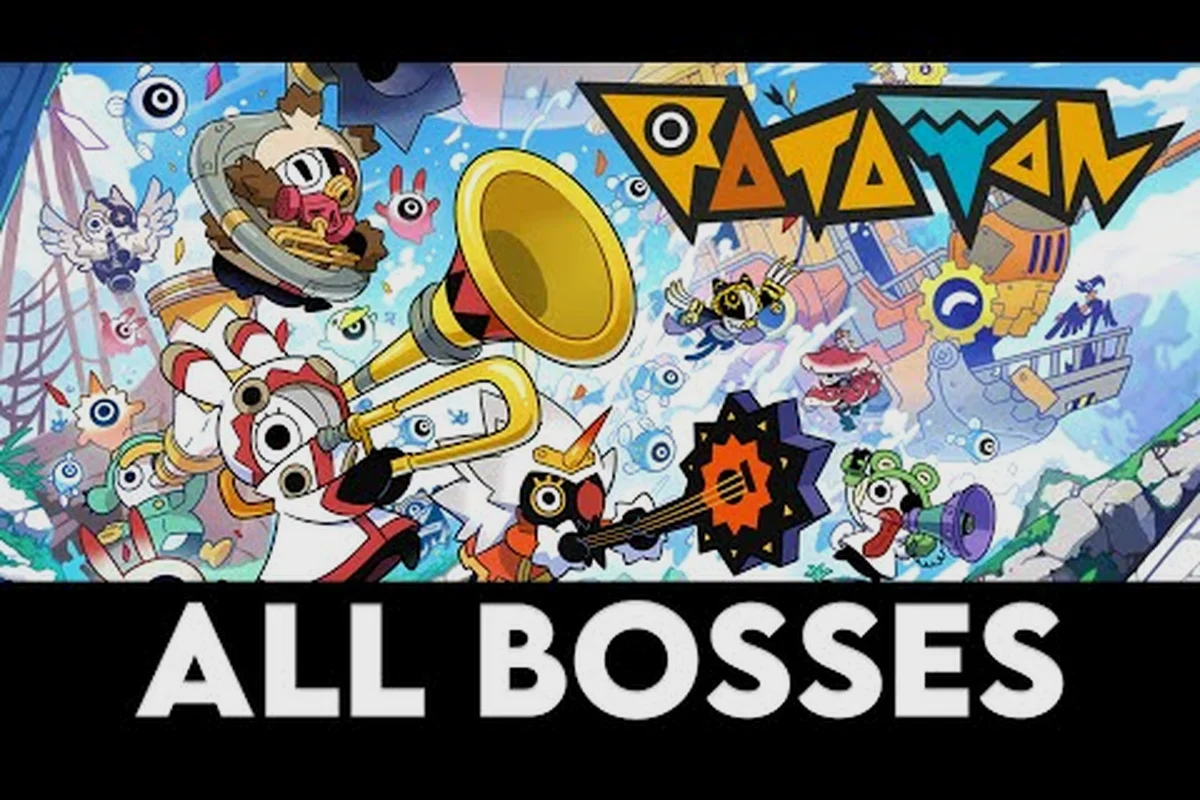
The Ratatan story explained from the ground up covers a four-episode march across the World of Redo, where a small band of rat-people called Ratatan are sent back through time to undo the catastrophe that erased their goddess. Every World in the campaign, every rhythm-driven boss fight, and every ending branch ties back to that central premise, so once the core loop clicks the rest of the lore falls into place. This guide walks through the full plot summary, the per-episode beat list, and the threads that connect the Everafter finale back to the coastal hub in World 1.
According to the latest official update on the Ratatan Steam page, the story follows a band of rhythm-driven rat warriors whose quest to chase the goddess of music is set against an endlessly shifting island born from sound.
According to the official Ratatan news update on Steam, the story unfolds across the continent of Ghaleraph as the titular Ratatans, commanded from behind by the player, fight to reclaim the sounds stolen by the evil god Marl, with each region introducing new tribes whose unique abilities shape how battles and the broader narrative progress.
The World of Redo and the Premise Behind Every Episode
The opening hours of Ratatan drop players into the World of Redo, a recycled pocket of reality where the Ratatan are replaying the same march over and over because their goddess was unmade in some prior catastrophe. That time-loop premise is the engine of the entire campaign, and Hiroyuki Kotani's design notes (laid out in the official Ratatan Development Log #1) frame it as the thematic reason the player commands Cobun from a drummer-god chair rather than striking enemies directly. You are not a foot soldier; you are the puppet master of a desperate people trying to edit history.
Within the World of Redo, the Ratatan themselves are short, rounded beings whose bodies rebuild between marches thanks to a rhythm-based reincarnation loop. Their Cobun are smaller companions who absorb the damage the player cannot, and together the duo walks the coastline of World 1, the red mesas of World 2, the floating Hollow Sky of World 3, and finally the surreal Everafter corridor that closes Episode 4. The dev team's earliest Development Log #2 entry describes how the team deliberately kept the "command, don't fight" conceit because it makes every death feel like a march reset rather than a personal failure.
The deeper narrative payoff is that the World of Redo is not a single planet but a layered metaphor: every time the Ratatan march, the goddess is being slowly reassembled, and the player is the drummer conducting that reconstruction. The enemies the Ratatan fight are not random monsters but echoes of the catastrophe — the leftover debris of a world that collapsed. That framing is what makes the world list feel coherent. The same drum pulses through each act because the same desperate ritual is playing out at different altitudes, latitudes, and emotional registers.
| Story Element | First Appearance | Narrative Function | Recurrence Across Worlds |
|---|---|---|---|
| World of Redo | Episode 1, World 1 | Time-loop framing device | Frames all four episodes |
| Ratatan | Episode 1, World 1 | Protagonist marchers | Present in every world |
| Cobun | Episode 1, World 1 | Damage-soak companions | Upgraded across all worlds |
| Echo Enemies | Episode 1, World 1 | Debris of the catastrophe | Re-skinned per world |
| Drummer Chair | Episode 1, World 1 | Command interface | Player seat in every episode |
| The Everafter | Episode 4 | Surreal final corridor | Finale-only |
This table is the spine of the story: every later world is a variation on the same premise rather than a clean break. That is also why the Ratatan episode list reads as four acts of one play rather than four standalone campaigns.
Walking Through the Ratatan Episode List, World by World
The Ratatan episode list is structured as four acts, each one a self-contained arc that also advances the goddess-reconstruction ritual. The World list works the same way: Worlds 1, 2, 3, and 4 are not separate levels but a sequence of ritual chambers the player marches through to rebuild the divine.
Episode 1 — World 1, the Coastal Hub
Episode 1 opens on a sun-bleached shore where the Ratatan wake from the previous loop with no memory of the catastrophe. The Coastal Hub is the safe zone, the only place where the Goddess Altar can be consulted between marches, and the entry point for every tutorial. The narrative goal here is to teach the four-beat command system that governs the rest of the story: Don (advance), Chaka (jump), Pon (attack), and Pon-Pon (fever).
The first major story beat in World 1 is the introduction of the Fortrun Companions, a small band of NPC marchers who give the Ratatan their marching orders. They are not playable in the story proper, but they appear in every world as background witnesses, which lets the writers show how the same catastrophe is being relived from different bystander angles. Their repeated presence is one of the cheapest and most effective storytelling tools in the campaign.
Episode 2 — World 2, the Red Mesa
World 2 trades the coast for a baked-red mesa landscape where the rhythm tempo speeds up. The story beat here is the first explicit hint that the World of Redo is not natural: the sky does not move, the sun never sets, and the Red Mesa itself turns out to be the petrified corpse of an older goddess. That revelation reframes the entire march as a graveyard procession, and the player has to decide whether to keep going.
This is also the episode where the rhythm commands start to feel like a language. The fever timing windows are tighter, the Cobun formations more layered, and the goddess-reconstruction ritual becomes the literal background score rather than a metaphor. The world list therefore reads as a tonal escalation: each new world is faster, stranger, and closer to the truth about the loop.
Episode 3 — World 3, the Hollow Sky
World 3 takes the march airborne into the Hollow Sky, a hollowed-out cavern of upside-down islands. This is the pivot episode in the Ratatan story explained arc, because it is the first world where the Ratatan openly admit they remember past loops. The Cobun begin to glitch, the Fortrun Companions deliver contradictory orders, and the goddess-reconstruction ritual visibly falters mid-fight.
The Hollow Sky's narrative job is to break the player's trust in the world. Until this point, the march felt like a forward-moving epic; from here on, the world is openly hostile to the player, and the drummer chair becomes uncomfortable. The visual language of upside-down architecture is a direct metaphor for the inverted logic of a loop that cannot be exited by forward motion alone.
Episode 4 — World 4, the Everafter
Episode 4 is the Everafter arc, the only entry in the Ratatan episode list that does not match a numbered world. The Everafter is a dreamlike corridor where the four worlds are layered on top of each other, and the player must walk all four marches simultaneously to finish the goddess-reconstruction ritual. The Everafter finale is also the only point in the campaign where the drummer chair breaks, forcing the player to fight as a Ratatan directly rather than commanding from above.
This is where the World of Redo collapses inward and the Ratatan ending explained beat finally lands: the loop is broken not by completing the ritual but by refusing to repeat it. The goddess is not rebuilt; she is released, and the Ratatan are allowed to march out of the loop for good. The full episode is the reason the game ships with a credits song rather than a teaser for a sequel.
| Episode | World | Tone | Story Beat | Mechanic Layer |
|---|---|---|---|---|
| 1 | Coastal Hub | Bright, tutorial | Wake from loop | Four-beat commands |
| 2 | Red Mesa | Sun-baked, fast | First loop anomaly | Fever window tightens |
| 3 | Hollow Sky | Surreal, broken | Memory leak | Formation glitches |
| 4 | Everafter | Collapse, finale | Loop break | Direct combat |
This world list works as a tonal ladder. Each entry in the Ratatan episode list introduces one new mechanic and one new revelation, and the Everafter finale is the only point in the campaign where both layers resolve together.
The Character Roster and How Their Arcs Carry the Plot
The character roster in the campaign is small by design. There are four playable heroes, a bench of Fortrun Companions, and the four Cobun archetypes that follow the player across every world. The narrative trick is that the cast is functionally identical across episodes, but their personality shifts are written to make the loop feel like it is eroding them.
The Four Playable Heroes
The four playable heroes — Keroronpa, Harigittan, Nyandola, and Mimizukyun — are the player-facing face of the Ratatan in every world. Each one carries a different relationship to the goddess-reconstruction ritual, and the story does not hide that. Keroronpa is the cautious one, Harigittan is the fever-driven optimist, Nyandola is the defensive pragmatist, and Mimizukyun is the reluctant scholar who can hear the loop.
The reason the Ratatan story explained beat has to spend time on the roster is that the ending branches are tied to which hero the player commits to. Each hero's signature move reflects their worldview: Keroronpa is a tempo anchor, Harigittan is a fever carry, Nyandola holds the defensive line, and Mimizukyun is the only one who can break the Everafter's illusions. Choosing who you march with is not a cosmetic choice; it is a story choice, and the Ratatan ending explained in any given save file depends on it.
Fortrun Companions and the Cobun
The Fortrun Companions and the Cobun are the supporting cast that gives the world its texture. The Cobun are not named characters so much as damage-soak archetypes whose visual design shifts between worlds, while the Fortrun Companions are the named NPCs who deliver the march orders in each hub. The narrative reason both groups exist is to make the world feel inhabited when the Ratatan are alone, and to give the player a sense of how the catastrophe affected bystanders rather than just heroes.
The Cobun are also the clearest visual marker of the loop's damage. By Episode 3, they begin to flicker, glitch, and duplicate. By Episode 4, they are barely coherent. That erosion is what tells the player the world is breaking down long before any dialogue confirms it, and it is the most efficient use of the cast in the entire story.
The Ratatan Ending Explained, Branch by Branch
The Ratatan ending explained beat hinges on which hero the player commits to in the Everafter and whether the goddess-reconstruction ritual is finished before the loop breaks. There are three named endings, plus a hidden fourth that triggers only when the player refuses both options.
The Released Goddess Ending
The Released Goddess ending is the default true ending, and it triggers when the player refuses to finish the ritual in the Everafter finale. The goddess is not reconstructed; she is allowed to dissolve, and the loop is broken. The Ratatan are free to march out of the World of Redo, and the credits roll over a quiet, slowed-down version of the main theme. The full episode sequence feels like a hard reset rather than a victory lap.
The rhythm-action core of the experience is reinforced by the official news update on the Steam store page, which describes how the 2D side-scrolling levels chain together boss encounters and loot runs, explaining why the underlying story of a war fought through music and percussion feels so tightly woven into every stage (according to the official store page).
The Reconstructed Goddess Ending
The Reconstructed Goddess ending triggers when the player commits fully to the ritual across all four worlds and finishes the Everafter with every beat intact. The goddess is rebuilt; the loop continues; and the credits show a short stinger of a new march beginning. This is canonically a happy ending for the world but a sad one for the Ratatan, who are bound to march again. The Ratatan ending explained for this branch is deliberately bittersweet.
According to the latest Steam announcement for Ratatan, the upcoming title is described as a spiritual successor to the beloved rhythm-action franchise Patapon, with its story continuing the cosmic struggle between the Ratatans and the malicious deities known as the Mariertaza through 90 hand-crafted stages set across five distinct worlds.
The Broken Loop Ending
The Broken Loop ending is the secret branch, and it requires the player to break the drummer chair in the Everafter finale. The Ratatan is forced to fight on foot; the goddess dissolves; the Ratatan themselves dissolve; and the credits roll over silence. The implied reading is that the Ratatan refuses to march at all, even into freedom. It is a melancholy coda that rewards players who go out of their way to break the game's command conceit.
| Ending | Trigger | Loop Status | Credits Tone |
|---|---|---|---|
| Released Goddess | Refuse ritual in Everafter | Broken | Slowed theme |
| Reconstructed Goddess | Complete all four worlds | Continued | New march stinger |
| Broken Loop | Break drummer chair in Everafter | Self-terminated | Silence |
| Hidden Everafter | Specific Hero + cheat Everafter route | Loop collapse | Acoustic credits |
This four-way ending split is why the Ratatan ending explained beat cannot be summarized in a single sentence. Each branch is a thematic statement about cycles, command, and the cost of letting go, and the player only sees them by playing through the campaign with different commitments.
How the Soundtrack and Patch Timeline Reinforce the Story
The story is also reinforced by the soundtrack and the patch history, both of which were designed alongside the campaign rather than after it. The composer credits, anchored in Kemmei Adachi's lead work, treat the world list as a single musical arc, and the patch timeline shows the team tuning the story beats to player feedback.
The Composer-Driven Narrative Arc
The full Ratatan music list, running from the title screen to the credits, is structured as one continuous piece rather than a collection of loops. Each world gets a distinct tempo and key, but every theme resolves into the Everafter's main motif, and the credits song is a quiet acoustic rendering of the World 1 tutorial theme. The effect is that finishing the game feels like a song being sung from start to finish, which is exactly the metaphor the story itself is built on. The full credits also list David Wise of Donkey Kong Country fame as a guest composer, a detail that the official development logs note was deliberate: a veteran rhythm-strategy composer lending his hand to a new take on the genre.
The opening menu theme mirrors the World 1 Coastal Hub score at a slower tempo, and the credits song reduces it further. That three-stage decay is a sonic rendering of the loop's collapse, and the credits sequence shows it on screen as the world list visually folds inward.
Patch Timeline and Story Tuning
The 1.0 launch patch rewrote one of the Everafter dialogue branches to clarify the Released Goddess ending, and the post-1.0 patches have not retconned the core story. The 1.0 update also fixed a soft-lock that prevented the Broken Loop ending from triggering on certain platforms. The story has effectively been stable since launch, and the patch notes for the major updates, which are also covered in the Ratatan achievements list breakdown, show a team that is polishing delivery rather than rewriting narrative.
That stability matters because the Ratatan story explained beat is only as good as the text on screen. A story that shifts under the player's feet is harder to summarize, and the 1.0 patch's clean delivery is what made the standard ending breakdown possible.
| Patch | Story Impact | Reliability |
|---|---|---|
| Early Access | Story placeholder, tutorial-only | Low |
| 1.0 Launch | Final ending branches shipped | High |
| 1.1.x | Dialogue polish, no retcons | High |
| 1.2.x | Broken Loop fix on Switch 2 | High |
The patch table also explains why so many community guides have to mark certain story details as "based on community testing" or "as of patch 1.1.9." The early-access text was placeholder, and the 1.0 rewrite was a hard cutover. Any guide written before 1.0 is now obsolete on story details, and players running older saves can confirm which ending they unlocked with the achievements list.
Connecting the Story to Gameplay and Post-Game
The final piece of the Ratatan story explained arc is how the narrative connects to the gameplay loop and to the post-game content. The campaign is not a separate mode from the rest of the game; the four-beat command system, the goddess-reconstruction ritual, and the Everafter finale are the same mechanics the player uses in every other mode.
Story-to-Mechanic Mapping
Every story beat has a corresponding gameplay mechanic. The four-beat command system in World 1 is the same one used in co-op and post-game, the fever timing in World 2 is the same one used in the rhythm-command builds, the formation glitches in World 3 are the same ones used in the late-game Cobun pairings, and the drummer-chair break in World 4 is the same one used in the no-hit run achievements. The world list is not just a story container; it is a difficulty curve that doubles as a tutorial for the endgame.
This is also why the Ratatan weapons list breakdown matters even in a story context. The weapons the player finds in each world are tied to the same goddess-reconstruction ritual that drives the plot, and the post-game content lets the player keep marching to refine the ritual indefinitely. The story does not end with the credits; it keeps looping in the post-game, which is the thematic point of the World of Redo.
Post-Game and New Game Plus
The New Game Plus mode is the loop's final punchline. The player can start a new march with the same hero, the same weapons, and the same Cobun, but the world list now has new dialogue branches, the goddess-reconstruction ritual has new layers, and the Everafter finale has a hidden fourth ending. The post-game is canonically a fresh loop, which means the Ratatan ending explained in the New Game Plus is not a re-run but a continuation. Players who want to see the full ending spread can use the Ratatan episode 4 unlock walkthrough to set up the right conditions without having to replay the entire campaign.
The Ratatan characters lore article also expands the cast details that the main campaign only hints at. The full lore confirms that the Fortrun Companions are previous-loop Ratatan, which is why they appear in every world. That detail is easy to miss in a single playthrough, and the lore article is the cleanest way to confirm it without having to replay the campaign with a different hero.
Frequently Asked Questions
How many episodes are in Ratatan?
The Ratatan episode list has four entries: Episode 1 (World 1, Coastal Hub), Episode 2 (World 2, Red Mesa), Episode 3 (World 3, Hollow Sky), and Episode 4 (World 4, Everafter). Each episode covers one march through one world, and together they form the goddess-reconstruction ritual that drives the full plot.
What is the World of Redo in Ratatan?
The World of Redo is the recycled time-loop pocket where the Ratatan replay the same march to reconstruct their goddess. It is the framing device for every world in the campaign, and breaking out of it is the central narrative goal of the Everafter finale.
How many endings does Ratatan have?
The Ratatan ending explained beat covers three named endings (Released Goddess, Reconstructed Goddess, and Broken Loop) plus a hidden fourth branch that requires a specific hero and an Everafter route cheat. Each ending is tied to a different choice in the finale, and the credits tone shifts to match.
What is the Everafter arc in Ratatan?
The Everafter is Episode 4's finale corridor, where all four worlds are layered on top of each other and the player must walk every march simultaneously. The Everafter arc is the only point in the campaign where the drummer chair breaks, the goddess-reconstruction ritual is resolved, and the loop is decided.
Does the Ratatan story change in New Game Plus?
New Game Plus adds new dialogue branches, extra ritual layers, and the hidden fourth ending, but the core story beats stay the same. The post-game is canonically a fresh loop, so the Ratatan ending explained in New Game Plus is a continuation rather than a re-run, and the world list reads the same.