
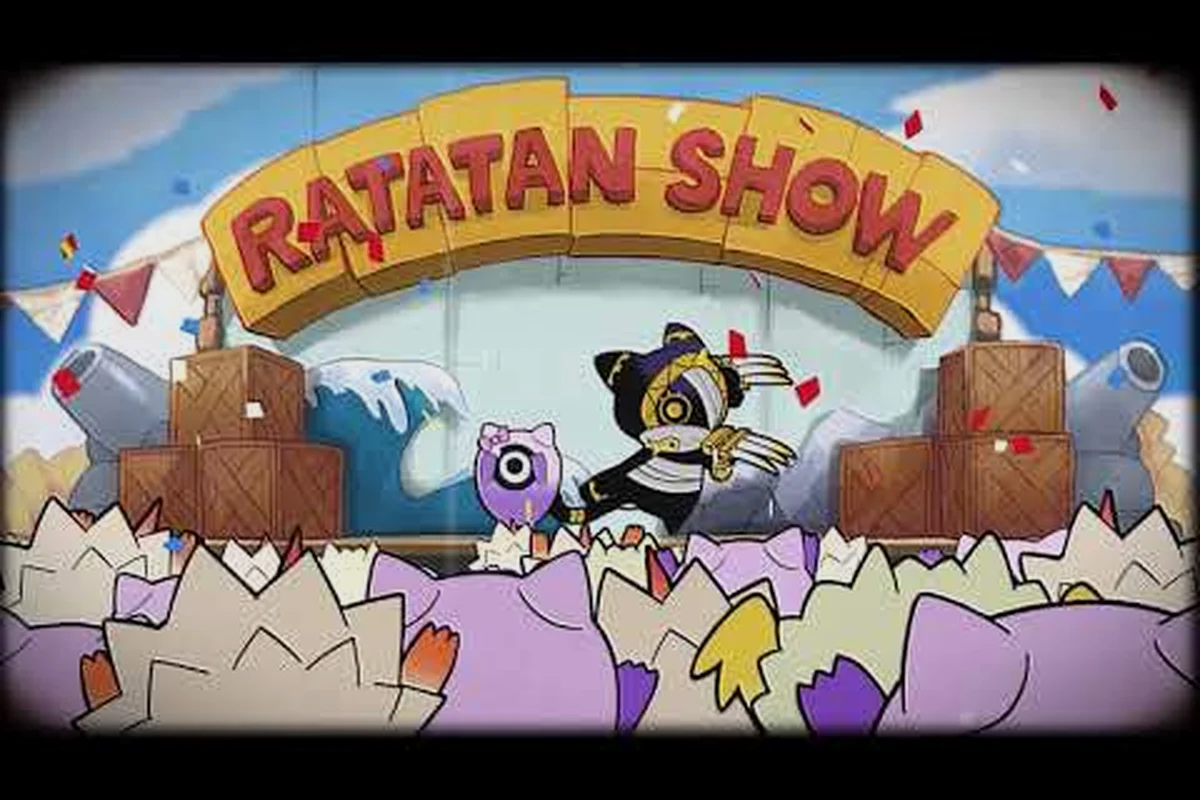
The Ratatan developer interview trail runs through three years of crowdfunding, a deliberately hand-drawn roster, and a 2D rhythm-command hook that owes a clear debt to Patapon. Ratatan was first pitched as a Patapon spiritual successor before it ever had a publisher, and the Ratatan Kickstarter story became the moment that pitch became a real project. This article walks through the public Ratatan development history in the order the team themselves told it, then turns to what the Ratatan Paraddean Sea setting actually contains, so you can read the world design alongside the production context that shaped it.
According to the official Ratatan Steam News post, the developers discussed the core mechanics, rhythm-based combat system, and design inspirations that shaped the game's development.
The Patapon DNA in Ratatan's Design Pillars
Every conversation about the Ratatan developer interview trail eventually circles back to one question: how much of Patapon is actually in the game? The team's own writing answers it with a structural claim, not a marketing line. Ratatan positions itself as a Patapon spiritual successor because the rhythm-command loop is not borrowed as a gimmick but rebuilt around a different input feel and a different cast of characters. The commands still drive marching, attacking, defending, and retreating, but the execution layer pulls in Hustle Tech cancels, layered status windows, and a fever-gauge system that the original PSP template never had to balance.
That is where the Ratatan Patapon connection gets specific. The team is not chasing nostalgia through art direction; they are building a second-generation rhythm-action game on top of a formula they clearly love. In the public developer logs, the studio has said the campaign page led with the cast because Ratatan uses a large amount of hand-drawn 2D animation, and stills alone could not convey how the characters move. The same attention to character motion shows up in the Super Fever Gauge timing windows and the way Cobun formations rotate on the beat. If you are mapping the lineage, think of Ratatan as a more crowded, more stackable take on the same idea, not a thin reskin.
Why Ratatan Markets Itself as a Spiritual Successor
There is a marketing reason and a design reason, and the two reinforce each other. The marketing reason is straightforward: the Patapan audience is identifiable, vocal, and still hungry for a direct 2D rhythm successor. The design reason is that the team actually enjoys building inside the rhythm-action genre, and the spiritual successor framing gives them permission to evolve the formula rather than clone it. Elemental Force stacking, RATAKARUTA card loadouts, and the Goodie Gate mid-run shop are all places where Ratatan extends the loop instead of repeating it.
What the Team Took From Patapon — and What They Left Behind
The team kept the rhythmic input model because it is the cleanest way to make a marching squad feel like a single instrument, and they kept the compact mission structure because the genre lives or dies on short, replayable runs. What they left behind is the hardware-bound single-screen presentation; Ratatan pushes a wider field, more on-screen units, and a much busier HUD. The result is a spiritual successor that respects the Patapon template but refuses to be limited by PSP-era constraints.
| Design Pillar | Patapon (Original) | Ratatan Today | Direction of Change |
|---|---|---|---|
| Input method | 4-button drum patterns | Rhythm-command + Hustle Tech cancels | Adds cancel windows, keeps feel |
| Squad size | 3 unit types, capped groups | Larger Cobun formations with formation switching | More tactical depth |
| Status system | Class matchups | Elemental Force layering with status tiers | Stackable, not binary |
| Presentation | Small screen, sprite-based | Hand-drawn 2D animation, widescreen | Production scale up |
| Run economy | Single-resource loop | Tokens, Melodium, Goddess Lottery layers | Longer-term meta |
The Kickstarter Path: How Ratatan Got Funded
The Ratatan Kickstarter story is one of the cleanest public postmortems a small Japanese studio has published. The team treated Kickstarter as a development log, not a launch trailer, and the post-campaign writing reads like a case study. The campaign went live with a page that led on the cast, walked through the rhythm-command hook second, and put the budget breakdown last. That ordering was deliberate: the studio wanted a first emotional reaction of curiosity about the characters before the prospective backer ever read a feature list.
The Campaign Window and the Two-Peak Funding Curve
The team picked a 30-day window on purpose. In their own analysis, Kickstarter recommends thirty days or less because a limited window creates urgency and improves the odds of success, and the campaign's actual funding graph matched the textbook two-peak pattern. The first peak came from backers who had been waiting for the launch and converted on day one, the middle stretched into a quieter stretch of organic discovery, and the second large spike came as undecided supporters committed in the final 48 hours. Reading the Ratatan Kickstarter story alongside the team's own Kicktraq screenshots is the easiest way to see how a rhythm-action niche can clear its goal without mainstream press coverage.
What the Money Actually Bought
Here is where the Ratatan development history gets more honest than most. In Development Log #10, the studio published a detailed post-mortem explaining that the headline amount raised is not the same as the development budget. Platform commission, transaction fees, physical-reward manufacturing, international shipping, and local taxes are all deducted before any money reaches production. The campaign offered a boxed edition, an art book, and a soundtrack among its physical tiers, and those logistics costs ate into the gross significantly.
| Cost Bucket | What It Covers | Approximate Impact |
|---|---|---|
| Platform commission | Kickstarter + payment processor fees | Single-digit to low-double-digit % |
| Physical reward manufacturing | Boxed edition, art book, soundtrack CD | Highly variable per tier |
| International shipping | Worldwide backer fulfillment | Largest hidden cost in physical campaigns |
| Local taxes | VAT, GST, sales tax on pledge value | Region-dependent |
| Net to development | Actual budget for the team | Smallest line on the chart |
The takeaway is that the campaign bought the team time and a backer community, not a windfall. For anyone modeling their own campaign, the Ratatan Kickstarter story is the rare example of a studio publishing the actual math.
Building the World: Inside the Paraddean Sea
The Ratatan Paraddean Sea is the studio's term for the world the cast marches through, and the world is built the way the campaign page was built: cast first, mechanics second, lore as connective tissue. Ratatan's four Episodes — Coastal Hub, Red Mesa, Hollow Sky, and Everafter — each pull a different visual identity, and the world design doubles as a pacing ladder. Early Episodes are bright and readable; late Episodes compress the field and stack more phase events per fight.
Geography and Visual Identity by Episode
The Paraddean Sea functions as a navigation metaphor as much as a literal map. Ratatan treats the world as a single connected ocean dotted with the Episode hubs, and the difficulty curve is tied to distance from the Coastal Hub rather than to a hidden level number. If you want a closer look at how the world order maps to story beats, the Ratatan story explained walkthrough covers the Episode flow and the Everafter ending in more detail.
| Episode | Visual Identity | Combat Focus | Pacing Role |
|---|---|---|---|
| Coastal Hub (World 1) | Open coast, soft palette, large readable sprites | Rhythm basics, 2-3 unit squads | Tutorial + onboarding |
| Red Mesa (World 2) | Warm reds, layered mesa silhouettes | Ranged unit introduction, midboss walls | Skill test |
| Hollow Sky (World 3) | Floating ruins, vertical elements | Aerial enemies, formation switching | Mechanical expansion |
| Everafter (World 4) | Compressed field, dark palette, dense particles | Phase events, layered boss timers | Endgame + true ending |
How Music and Composer Credits Tied Into the World
The Ratatan development history in the credits reads differently from a typical indie rhythm game because the composer roster is unusually deep. The soundtrack credits include both in-house composers and outside contributors, and the team has spoken about how the Paraddean Sea world was scored to match the march tempo of each Episode rather than scored generically. The boss themes in particular pull from the same composer pool that shaped the World themes, so a returning player can hear a thematic link between a midboss and the Episode hub without it being spelled out. For the production side of that collaboration, the David Wise composer profile article walks through how the outside contributors were integrated.
The Team Behind the Project and Their Roles
The public Ratatan developer interview material repeatedly centers three names: Kemmei Adachi on direction, Hiroyuki Kotani on art, and Kenei Nakasha on the design side. The three of them appear in nearly every developer log, every post-campaign update, and every public Q&A. The supporting credits are larger, but the public-facing voice is unusually narrow, which is part of why the project reads as a coherent vision rather than a committee product.
Direction, Art, and Design as a Working Triangle
Adachi's role is to keep the rhythm-action core legible across every feature, Kotani's role is to make the hand-drawn 2D animation carry the personality the campaign page was built around, and Nakasha's role is to translate those into the Fever Gauge, the RATAKARUTA card system, and the Cobun command input layer. The triangle works because each of them is willing to push the others' decisions: the design can ask for a new status effect, the art can ask whether it can be communicated through animation, and the direction can veto if the result breaks the rhythm-command readability. The Patapon comparison is unavoidable, but the team has also been clear that the Patapon Patapon connection runs through the design philosophy rather than through any licensed agreement.
Studio and Co-Production Background
Ratatan is a co-production between two studios, and the public credits list both Source Entertainment and TVT Studio as production partners. The physical edition strategy is run through Red Art Games, which explains why the boxed edition, art book, and soundtrack CD had real manufacturing and shipping weight in the post-campaign budget breakdown. For players who want to see how that physical edition compares to the digital release, the existing Ratatan Patapon comparison guide covers the structural and mechanical overlaps in more depth.
Pre-1.0 Posture and What Comes Next
The post-campaign Ratatan development history is now a public record: Early Access builds, the v1.0 release on PC, the 1.1.9 patch, the Switch 2 and PS5 launch windows, and the live patches since. The studio's communication style has not changed with the launch, and the developer logs are still being posted in the same voice. The Kickstarter backers are still treated as the first audience, and the patch notes still explain the design reasoning, not just the changes.
What Players Can Learn From the Ratatan Development History
The clearest lesson is that a rhythm-action spiritual successor works in 2026 only if the team commits to the long-form production work the genre requires. Ratatan survived Early Access because the developer logs built trust before the game shipped, and the team used the post-campaign period to publish the actual budget math instead of a victory lap. The Paraddean Sea world got more ambitious, not less, and the team kept shipping hand-drawn 2D animation when it would have been cheaper to cut. For anyone looking at a similar campaign, the Ratatan Kickstarter story is the closest thing the rhythm-action niche has to a public playbook.
Frequently Asked Questions
Is Ratatan officially a Patapon sequel or just a spiritual successor?
Ratatan is a Patapon spiritual successor, not a licensed sequel. The developer logs frame the project as a continuation of the rhythm-action genre the original established, with a new cast, a new world, and an expanded command layer, but no formal IP agreement with the original rights holders.
How much of the Kickstarter money actually reached development?
According to the team's own Development Log #10, only a portion of the headline total reached the development budget. Platform commission, transaction fees, physical-reward manufacturing, international shipping, and local taxes were all deducted from the gross before production money was allocated, which is why the studio emphasizes that the campaign bought time and community rather than a windfall.
Who are the main voices behind the Ratatan developer interview material?
The public-facing voice centers on three names: Kemmei Adachi on direction, Hiroyuki Kotani on art, and Kenei Nakasha on design. The supporting studio credits include Source Entertainment and TVT Studio, with Red Art Games handling the physical edition logistics.
What is the Paraddean Sea in Ratatan's world design?
The Paraddean Sea is the studio's framing for the world the cast marches through, structured as a single connected ocean with four Episode hubs. The visual identity and combat focus shift per Episode, with the difficulty curve tied to distance from the Coastal Hub rather than to a hidden level number.
Why did the team lead the Kickstarter page with the cast instead of the gameplay?
The team has explained that Ratatan relies on a large amount of hand-drawn 2D animation, and stills alone could not convey how the characters move. Leading with the cast was meant to generate a first emotional reaction of curiosity, with gameplay explanation placed second on the page.