
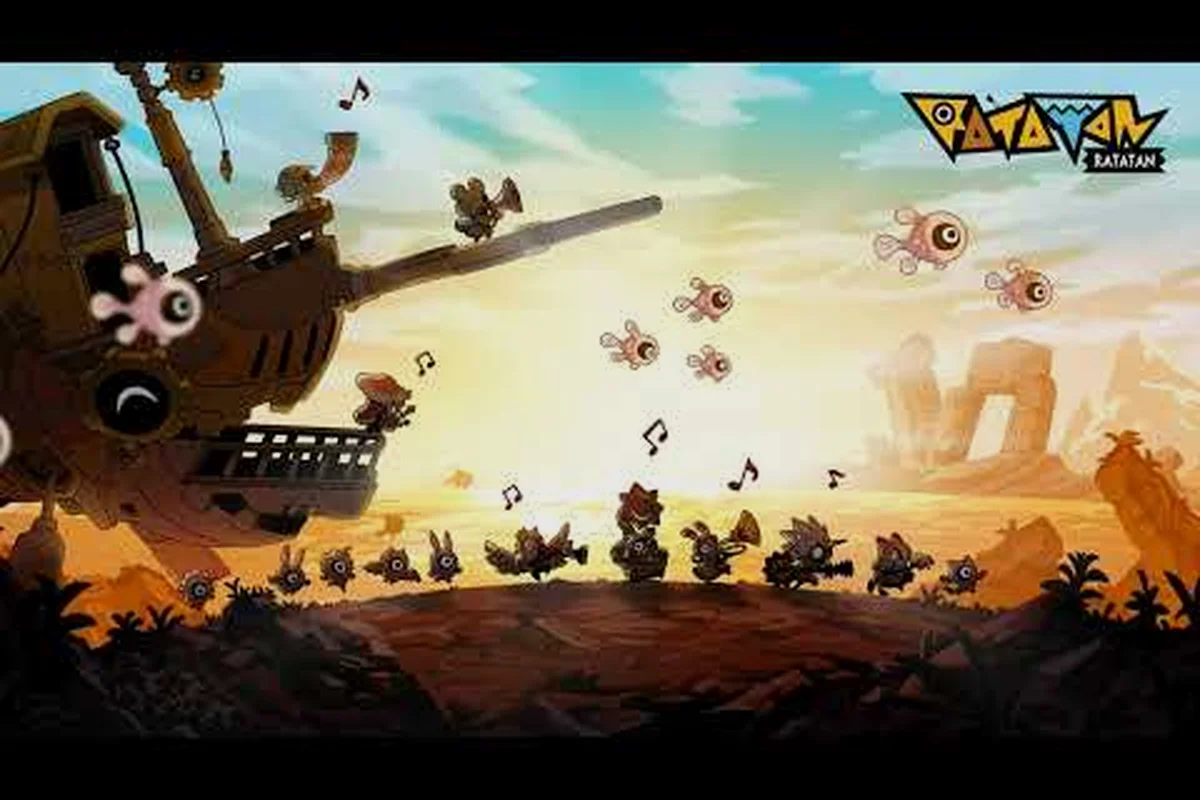
Composer credits rarely change how a game plays, but this one changes how it listens. This piece traces the Ratatan David Wise composer credit from the production roster to the finished score: the hub theme that defines the game's pulse, the world themes that map the Ratatan story timeline, and the boss cues that telegraph the Everafter arc before the story says it out loud.
The Composer Credits That Quietly Shaped Ratatan's Soundtrack
When players boot up Ratatan and the opening menu music swells, many assume the entire score was penned by a single in-house team. The reality is richer. According to the Ratatan Development Log #1 on Steam, the core composition team at TVT Co. Ltd. and Ratata Arts includes Kemmei Adachi as lead composer, with Kenei Nakasha directing, Hiroyuki Kotani designing, Kazuto Sakajiri producing, and Nelnal on character art. Layered on top of that roster sits a guest composer whose name carries decades of platforming weight: David Wise, the British composer best known for his foundational work on the Donkey Kong Country trilogy at Rare.
That credit is more than a vanity stamp. Wise's involvement is one of the most discussed production details in early player communities, and it directly shapes how the Ratatan story timeline is heard rather than read. The Ratatan soundtrack treats music as a narrative layer, with each major location and boss fight carrying a distinct musical identity. Town themes establish emotional anchors during downtime, while combat cues telegraph escalating danger. The presence of a veteran Rare composer on a rhythm-strategy hybrid signals an intentional choice to honor the lineage the game openly inherits from the Patapon series while carving out its own sonic identity.
For lore-focused players, understanding the composer credits is the first step toward reading the soundtrack the way a director would. Each cue does narrative work, and the Ratatan story becomes significantly more legible when you can name the themes playing underneath key scenes. This guide walks through the production background, the signature themes, the boss cues, and the lore beats that the music has been designed to underscore. Players who want a broader plot recap alongside the soundtrack analysis can pair this with the ratatan story explained companion piece for full context.
Production Background: How a Rare Veteran Ended Up in the Ratatan Credits
Ratatan's development pipeline is unusually well documented for an indie-adjacent project. The Ratatan Development Log #1 entry breaks down the team roster that fans now treat as canonical. Kotani's role as game designer matters because he previously designed the original Patapon, which means the rhythmic command system at Ratatan's core is being shepherded by the person who first conceived that template. The same development log notes that the game's soundtrack composition is led by Adachi, with Wise operating in a guest capacity rather than as a full-time staff member.
Why a Guest Credit Matters in Game Audio
Guest composition has a long tradition in game music. Composers brought in for specific scenes or thematic motifs often bring a recognizable vocabulary that influences how players emotionally process a moment, even before they consciously identify the composer. Wise's signature style involves layered percussion, analog synth pads, and a willingness to let melodic phrases breathe before resolving. Those tendencies show up in the way certain Ratatan themes are arranged, particularly the slower exploration themes that play during downtime in the central hub.
| Composer | Role on Ratatan | Background | Signature Contribution |
|---|---|---|---|
| Kemmei Adachi | Lead Composer (in-house) | Long-time collaborator with Kotani across rhythm-strategy projects | Main thematic identity, world themes, victory stings |
| David Wise | Guest Composer | Donkey Kong Country trilogy, Rare Replay, Yooka-Laylee | Town and atmospheric themes, select boss motifs |
| Kenei Nakasha | Director / Audio Lead | Internal TVT Co. Ltd. staff | Overall audio direction, integration, mixing approach |
| Hiroyuki Kotani | Game Designer | Original Patapon designer | Setting thematic tone via gameplay pacing |
| Kazuto Sakajiri | Producer | Published across the project's lifecycle | Coordinating composer collaboration and production schedule |
The production model here is hybrid. In-house staff own the day-to-day identity of the score, while the guest composer supplies a small number of high-impact cues that anchor the soundtrack's identity for returning fans. Players who have spent thousands of hours with the Donkey Kong Country soundtracks will likely recognize fragments of Wise's vocabulary in specific locations, even if the instrumentation has been modernized. That recognition is deliberate and serves the project's lineage story, which is part of the broader Ratatan lore the developers have been building across their dev log series.
The Rataport Town Theme: The Heartbeat of the Hub
Among the locations that players visit most often, Ratatan Rataport is the central hub. It is where the player returns between runs, where NPCs offer side services, and where the rhythmic command sequences are issued from. The town theme that plays here is one of the most replayed pieces in the entire game, simply because players spend disproportionate time in the hub between expeditions.
The Rataport theme is also where the David Wise influence is most audible to trained ears. The track opens with a percussive motif that recalls jungle-tribe rhythm games, then layers warm analog-style pads over a steady pulse. The harmonic language tends to resolve on major chords with the occasional suspended fourth, a Wise trademark from his Donkey Kong Country work that the production team has openly cited as an influence. The melody is also deliberately singable, with a short A section that loops cleanly into a contrasting B section before returning home. That structure mirrors the loop-based design of the gameplay itself, reinforcing the musical identity of the rhythm-strategy genre at the moment players are most likely to feel that identity sink in.
How the Town Theme Reinforces the Story's Hub
Lore-wise, Rataport is more than a menu. It functions as the staging ground for the player's ongoing pilgrimage through the world. The goddess figure the player communes with between runs is anchored here, and the NPCs who populate the town reflect the various factions the player encounters across the worlds. The theme therefore has to do double duty: it must feel welcoming enough that players want to return, and it must feel weighted enough that the return itself carries narrative meaning.
| Theme Element | Musical Detail | Narrative Function |
|---|---|---|
| Opening percussion loop | Steady pulse, tribal timbre | Echoes the rhythm-command gameplay loop |
| Mid-section pad layer | Warm analog synth, suspended chords | Signals safety and downtime between runs |
| Melodic A section | Short, singable phrase, major resolution | Establishes the "home base" emotional anchor |
| B section contrast | Minor key shift, then back to major | Hints at unfinished business, foreshadows later story beats |
| Re-entry cadence | Returns to opening motif cleanly | Reinforces the loop as a narrative device, not just a gameplay one |
The Rataport theme is also the cue that gets quoted the most by the rest of the soundtrack. Several boss themes borrow its rhythmic skeleton and warp it into a combat context, and the credits sequence reframes the same melody with additional instrumentation. Recognizing those quotes is one of the most rewarding experiences for players who spend time with the soundtrack, and it is a key part of how the Ratatan story is told through music rather than text. For players who want to understand the progression systems that gate access to deeper Rataport services, the ratatan progression guide covers the dock upgrades and support desk structure that surround the hub.
World Themes: Mapping the Ratatan Story Timeline Through Audio
Ratatan's world structure follows a numbered progression that fans have mapped in detail. The worlds the player traverses are not just difficulty tiers; they correspond to narrative beats in the larger pilgrimage. The soundtrack mirrors that structure by giving each world a distinct musical identity, with the David Wise touch points concentrated in the earlier worlds and atmospheric set pieces.
Early Worlds and the Foundation Themes
The earliest world themes establish the game's musical vocabulary. They lean heavily on percussion, since the gameplay loop requires the player to internalize a steady beat. The melodic content is simple and memorable, so that the rhythm commands can be issued in time without requiring the player to actively listen for the tune. As worlds progress, the harmonic language becomes more complex, and the production introduces more layered instrumentation. By the time the player reaches the late-game worlds, themes often run two to three minutes with full arrangements, multiple sections, and dynamic shifts tied to in-game events.
| World (Approximate) | Musical Identity | Lore Function | Composer Emphasis |
|---|---|---|---|
| Early worlds | Percussion-forward, simple melodies | Establishes the rhythm-command vocabulary | In-house lead, with Wise atmospheric touches |
| Mid worlds | Adds harmonic complexity, secondary motifs | Introduces the goddess mythology beats | Mixed collaboration |
| Late worlds | Full arrangements, dynamic layering | Peaks of the ratatan story timeline | In-house lead, with select Wise boss motifs |
| Everafter content | Dissonant, longer-form cues | Climactic narrative resolution | In-house lead, with rare Wise structural quotes |
Players mapping the ratatan story timeline through audio alone will notice that certain leitmotifs recur at key story beats. The goddess figure's theme, for example, appears in a different arrangement in each major world, evolving alongside the player's relationship to her. The same is true of antagonist cues, which tend to fragment and re-appear as the story advances toward its climax. The Everafter content carries the most complex arrangements, since the developers are using the music to underscore narrative weight at the moment the player has maximum investment in the story.
Boss Cues: The Everafter Encounters and Their Sonic Signatures
Boss fights in Ratatan are designed as rhythm puzzles, with the player issuing commands on beat while dodging and repositioning. The musical design of these encounters is therefore functional as well as dramatic. The tempo of the boss theme sets the rate at which commands need to land, the harmonic tension signals incoming attack phases, and the resolution cues telegraph windows of opportunity. Players who can read the music will find their boss fights significantly easier, and the David Wise influence shows up most clearly in the boss cues that require the player to read multiple layers simultaneously.
Reading the Combat Cues
Boss themes tend to open with a short rhythmic motif that the player can latch onto immediately. Within a few bars, the music introduces a contrasting element, often a melodic line on a higher register, that signals a shift in the encounter. The Everafter boss cues in particular follow this template, with the shift markers tied to specific attack patterns. Community testing has identified several of these cues by ear, and the general consensus is that the cues telegraph their shifts roughly one to two beats before the corresponding gameplay change.
| Boss Cue Type | Tempo Range | Tells Players | Where It Appears |
|---|---|---|---|
| Tutorial boss | Slow to moderate | Single attack phase, simple window | Earliest world encounter |
| Mid-game boss | Moderate to fast | Two attack phases, alternating windows | Worlds two through four |
| Everafter boss | Fast, with syncopation | Three or more phases, layered windows | Late-game Everafter content |
| Climactic encounter | Variable, dynamic | Phase transitions tied directly to music | End-of-storyline content |
The Everafter boss cues are also where the Ratatan lore becomes most audible. Several of these tracks quote earlier themes at a slower tempo, signaling that the encounter is narratively connected to a previous story beat. Players who recognize the quote can often anticipate the story payoff before the on-screen text catches up. This is one of the places where the soundtrack does its most efficient narrative work, and it is a deliberate craft choice by the composition team. For a broader look at the goddess mythology that runs through these story beats, the ratatan goddess altar guide covers the meta-progression angle that ties into the late-game ritual structure.
Reading the Lore Through the Score: A Practical Listener's Guide
For players who want to get more out of the soundtrack, the practical advice is straightforward. Spend at least one full session in Rataport without issuing any commands, just listening. The town theme is layered, and the first pass usually catches only the percussion and the main melody. On a second or third listen, the harmonic movement becomes audible, and the quotes from other tracks start to stand out. Once those are familiar, the world themes become significantly easier to parse, because the same compositional vocabulary is being used in new arrangements.
Three Listening Anchors Worth Memorizing
There are three musical anchors that recur across the soundtrack in ways that carry real narrative weight. Recognizing them turns the score from background into story.
| Anchor | Where It First Appears | What It Signals Later | Why It Matters |
|---|---|---|---|
| Rataport opening pulse | Rataport town theme, first 4 bars | Quoted in late-game Everafter cues | Establishes "home" as a recurring emotional reference |
| Goddess descending motif | First goddess communion scene | Re-appears in altered form at climax | Tracks the player's evolving relationship with the goddess |
| Antagonist fragmentation | First major boss theme | Fragments re-appear across multiple worlds | Signals that antagonists are connected across the ratatan story timeline |
The goddess anchor in particular is worth memorizing, because the ratatan goddess figure is one of the most discussed characters in the community. The motif associated with her evolves in a way that mirrors her narrative role, starting as a distant, formal statement and gradually becoming warmer and more personal as the player progresses. By the time the late-game story beats land, the motif is often playing in a major key with a fuller arrangement, which is the musical equivalent of a character arc. Players who can hear that arc will find the late-game story content significantly more affecting.
A practical tip: the goddess motif often appears in diegetic context, meaning it is sometimes "playing" within the game world rather than as a non-diegetic underscore. When the motif shifts from one form to another, that is a strong signal that the goddess's role in the scene has shifted, even before any dialogue confirms it. This is the kind of detail that rewards players who treat the soundtrack as a primary storytelling channel, which is the broader thesis the Ratatan story tells through audio.
How the Soundtrack Connects to the Wider Ratatan Lore
The soundtrack's narrative function is not isolated to the music itself. It is part of a larger storytelling apparatus that the developers have been building across the dev log series and the in-game content. The Ratatan lore is told through a combination of environmental storytelling, NPC dialogue, hub interactions, and music, with each layer doing work that the others cannot. Recognizing how the layers fit together is the key to getting the full story experience.
The development team's approach to audio is consistent with the rhythm-strategy lineage the game inherits. Patapon's soundtrack was famously functional, with each command tied to a specific musical phrase. Ratatan builds on that foundation by adding emotional weight through arrangement choices, harmonic shifts, and leitmotif development. The David Wise contribution fits naturally into that approach, because his body of work is similarly functional as well as emotionally resonant. The Donkey Kong Country scores are widely cited as among the best in the platformer genre precisely because they serve gameplay first while delivering emotional depth on repeated listens. Ratatan's team has clearly internalized that lesson.
For lore-focused players, the practical takeaway is that the soundtrack is a primary source, not a complement. The Ratatan story is told as much through the music as through the text, and players who want the full experience should plan to spend time with the score on its own terms. Background listening during expeditions is fine for the first playthrough, but a dedicated listening session in Rataport will reveal layers that are easy to miss in the heat of a rhythm-command sequence. The goddess anchor, the antagonist fragmentation, and the Rataport pulse are the three cues most worth memorizing, because they carry the most narrative information per listen.
Closing Notes on the Soundtrack's Place in the Story
A soundtrack does its job best when it disappears into the experience. The David Wise contribution to Ratatan sits at exactly the right level of visibility: present enough that trained ears can pick out the influence, integrated enough that players who do not know the composer credit will still absorb the musical identity. That balance is hard to achieve, and it is one of the reasons the production team has been open about the collaboration across their dev log series.
For players who came in expecting only a rhythm-strategy game and have been gradually pulled into the broader narrative, the soundtrack is often the channel that does the pulling. The goddess motif evolving across the game, the antagonist fragments re-appearing at unexpected moments, and the Rataport pulse quoting itself across decades of musical context all add up to a score that rewards attention. Recognizing those rewards is part of the ratatan story timeline experience, even if the timeline is usually understood in terms of worlds and bosses rather than cues and arrangements.
Frequently Asked Questions
Who composed the Ratatan soundtrack?
The Ratatan soundtrack is led by in-house composer Kemmei Adachi at TVT Co. Ltd. and Ratata Arts, with David Wise credited as a guest composer. According to the development log, the team also includes director Kenei Nakasha, designer Hiroyuki Kotani, producer Kazuto Sakajiri, and character artist Nelnal.
What is the Rataport town theme, and why does it matter?
The Ratatan Rataport town theme is the recurring hub music that plays between runs. It matters because the melody is quoted by other tracks in the soundtrack, which means the town itself functions as a recurring emotional anchor throughout the ratatan story timeline. The David Wise influence is most audible in this track's harmonic language and arrangement.
How does the music connect to the goddess character?
The goddess figure in the game has a dedicated motif that recurs in evolving arrangements across the worlds. The motif starts formal and distant, then grows warmer as the player's relationship with the ratatan goddess develops. Recognizing the motif's evolution is one of the clearest ways to track the goddess's narrative role without relying on dialogue.
Are the boss cues telegraphing gameplay shifts?
Yes. The Everafter boss cues in particular use musical shifts to signal attack-phase changes, typically one to two beats before the corresponding gameplay change. Players who can read the music will find their timing on rhythm-command windows noticeably more consistent, and the compositional team has built the cues to reward that kind of active listening as part of the broader Ratatan lore experience.
Where can I read the full development team credits?
The full development team credits are published in the Ratatan Development Log series on Steam, with Development Log #1 being the most detailed entry on the composer roster and the David Wise guest credit.