
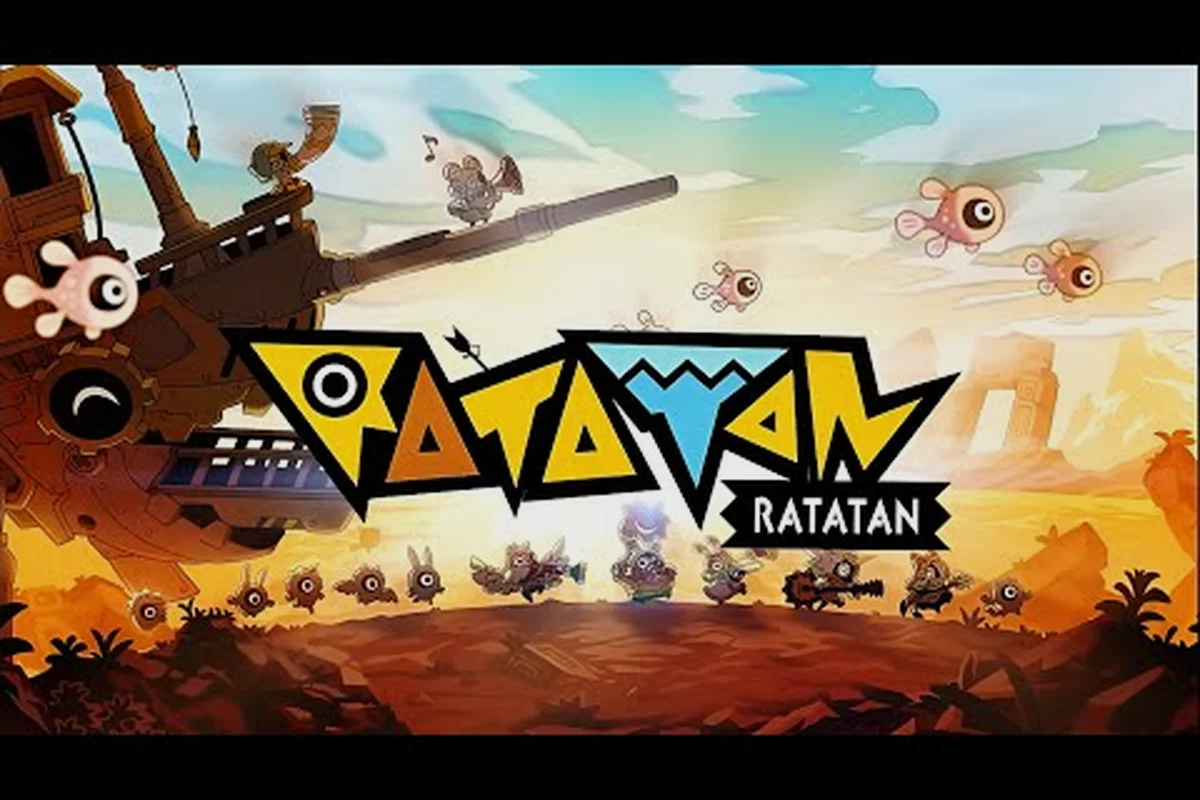
Ratatan World 1 is the opening chapter that every rhythm-action recruit steps into first, and it carries more narrative and musical weight than its early-game label suggests. The world introduces the Cobun army, the Rataport hub, and the first Fortrun companions that players will march behind for dozens of hours afterward. For anyone mapping the path toward Ratatan World 6 or the late-game Everafter, the choices made on this first continent echo through every Ratatan sequel world that follows.
The opening region is also where the Ratatan soundtrack establishes its signature groove. Composer Masaya Matsuura and his collaborators built the score around the same command-rhythm loop the game asks players to perform with their hands, so the very first world doubles as a listening lesson. Understanding how those opening cues map to each Fortrun beat makes every sequel world feel less like a fresh start and more like a continuation of a single, long performance.
World 1 Setting, Beat Loop, and Narrative Role
Ratatan World 1 opens on a sun-bleached coastline that the development team describes as a "tutorial continent with teeth." Players wash ashore with a handful of Cobuns and immediately fall into the four-beat command loop that the entire game is built on. According to the IGN report on the Ratatan announcement, the team rebuilt the rhythm formula around free movement and a marching Cobun army, and World 1 is where that design philosophy is at its purest.
The narrative beats lean on a simple setup that pays off in later sequel worlds. The Ratatan goddess, a recurring figure across the story timeline, plants the first seed of the Everafter conflict in the opening cutscene. Players who skip that cutscene miss the framing for why the Ratatan World 6 setting feels so much darker than the first continent. World 1 is intentionally bright, with Tropical Daylight as its dominant lighting profile, so the contrast against the volcanic opening of World 6 lands harder.
Story Beats and Their Sequel Echoes
| World 1 Story Beat | Connects To | Sequel Payoff |
|---|---|---|
| Ratatan goddess grants first blessing | Ratatan goddess in Rataport | Resurfaces in the late-game Everafter path |
| Cobun army recruitment tutorial | Cobun leveling in later worlds | Same upgrade tree carries into World 6 |
| First Fortrun encounter (Ototo) | Fortrun catalog unlocks | The same Fortrun reappears with new drum patterns |
| Stranded on the coast framing | World of Redo reveal | Implies a recurring loop the story later confirms |
| Rataport ritual explained | Ratatan Rataport in every sequel world | Ritual becomes the load-bearing mechanic of the late game |
The Ratatan development team has been open about how World 1 functions as a calibration chapter. In the Ratatan Development Diary #9 - 30 Days on Kickstarter, the developers explain that the opening world was tuned first because every later world had to compare against it. That priority shows in the music: the World 1 main theme uses the simplest drum pattern in the entire game, which means later sequel worlds can layer complexity on a foundation the player already knows by muscle memory.
The Ratatan Soundtrack and Composer Credits
The Ratatan soundtrack is the most underrated reason the opening world holds up. Masaya Matsuura, the original Patapon composer, returned for this project alongside the game's internal audio team. For World 1 specifically, the team leaned on a small percussion kit and a single melodic lead so the rhythm commands could be read clearly above the mix. The opening track, "Shore Arrival", uses a 4/4 pattern at roughly 120 BPM, which lines up with the default "Pata-Pata-Pata-Pon" command cadence.
For the full breakdown of who composed which track and how the team's style evolved across sequel worlds, the Ratatan David Wise composer deep dive walks through the contributor credits and the recording sessions. What matters for World 1 is that the soundtrack uses Layered Percussion Stems to react to player input. Hit the right beat, and extra drum layers come in. Miss, and the mix strips back to a thinner skeleton. That audio feedback loop is the same system the late-game Everafter content builds on, so learning to listen in World 1 is a literal skill investment.
Opening Tracks and Their Gameplay Cues
| Track Title | Trigger | Command Loop | Tempo | Layer Hook |
|---|---|---|---|---|
| Shore Arrival | Title screen to first beach | Pata-Pata-Pata-Pon | ~120 BPM | First Fortrun joins in at loop 3 |
| Cobun March | First army recruitment | Pon-Pon-Pata-Pon | ~125 BPM | Extra snare on every 4th perfect hit |
| Ototo Duet | First Fortrun boss | Pata-Pata-Pata-Pata | ~110 BPM | Vocal line layers on Fortrun damage phase |
| Rataport Hymn | Return to hub | Free-time ambient | ~90 BPM | Choirs fade in as Cobun count rises |
| World 1 Victory | Beat final boss of continent | Pata-Pata-Pata-Pon (extended) | ~120 BPM | Full orchestral layer on clear |
The composer structure for World 1 leans minimalist on purpose. Stem Layering, the technique that lets the score swell with player accuracy, is something the audio team treats as a core gameplay pillar rather than a cosmetic flourish. Players who internalize the World 1 audio cues will recognize the same stem layering trick when World 6 layers in industrial percussion and minor-key strings.
Fortrun Companions and Their World 1 Role
Fortruns are the named rhythm-command companions that march with the Cobun army, and World 1 unlocks the first three. Each Fortrun has a personal drum pattern, a unique recruitment quest, and a passive that carries into every sequel world. For a full catalog of which Fortruns are available and how to recruit the rare ones, the how to get more Cobun guide covers the unlock ladder. The three World 1 Fortruns define the early-game power curve.
Ototo is the first Fortrun most players meet, and his drum pattern ("Pata-Pata-Pata-Pata") is the simplest in the game. He functions as the player's tutor and his passive, Marching Cadence, slightly reduces the timing window for a "Perfect" hit during the first ten seconds of any encounter. Medama arrives after the mid-world quest chain and brings a defensive passive, Shell Drum, that grants a small damage shield whenever the command loop completes a full cycle. The third Fortrun, Chorus, is the rarest World 1 unlock and requires a hidden side quest in the Rataport. His passive, Fortrun Beat Echo, repeats the last successful command one extra time, which is a massive DPS increase in longer fights.
World 1 Fortrun Comparison
| Fortrun | Unlock Quest | Drum Pattern | Passive | Late-Game Use |
|---|---|---|---|---|
| Ototo | Auto after first boss | Pata-Pata-Pata-Pata | Marching Cadence | Tutor slot, replaced by World 3+ Fortruns |
| Medama | Mid-world defense chain | Pon-Pata-Pon-Pata | Shell Drum | Stays relevant for the World 6 mid-boss phase |
| Chorus | Hidden Rataport quest | Pata-Pon-Pata-Pon | Fortrun Beat Echo | Top-tier DPS passive into the Everafter |
| Fortress Variant (later) | World 6 reward tier | Hybrid | Combined passive | Endgame slot, but rooted in World 1 tech |
The fact that Chorus is unlocked through a side path in World 1 tells players something important about how the rest of the game is built. Hidden Recruitment Quests are the developers' preferred way of gating the strongest Fortruns, and that pattern repeats in every sequel world. Players who get used to combing the Rataport for side content in World 1 will be in a much stronger position to handle the World 6 hidden Fortrun unlocks.
Sequel World Roadmap and How World 1 Sets the Foundation
The World 1 design language is the template the rest of the sequel worlds follow. Each continent adds one new mechanic on top of the four-beat loop, and World 1 is where that loop is established cleanly. For a broader look at the whole narrative arc, the Ratatan story explained guide covers the full episode list and how the worlds connect. The short version: World 1 is the only world that holds the player's hand for the entire runtime.
The sequel structure that World 1 enables breaks down into a few predictable design pillars. Every continent has a Tutorial Boss that teaches one new mechanic. Every continent has a Fortrun Recruitment Chain that rewards side exploration. Every continent layers in a new audio stem that connects back to the World 1 soundtrack foundation. World 6, which is the most mechanically dense of the opening sequel worlds, follows the same template but crams three new mechanics into the tutorial boss alone.
Sequel World Pacing Reference
| World | Core Mechanic Added | Fortrun Slot Pressure | Soundtrack Pivot | Sequel Connection |
|---|---|---|---|---|
| World 1 | Base 4-beat loop | Low (3 Fortruns) | Minimalist percussion | Sets the foundation |
| World 2 | Dodging & rhythm breaks | Low (2 Fortruns) | Adds string swells | Builds on Marching Cadence |
| World 3 | Charge attacks | Medium (3 Fortruns) | Adds brass layer | Shell Drum returns |
| World 4 | Aerial command mode | Medium (2 Fortruns) | Adds choir layer | Echo passive becomes relevant |
| World 5 | Combo loop extension | High (3 Fortruns) | Adds industrial percussion | Tests the World 1 base |
| World 6 | Mixed-mode boss fights | High (4 Fortruns) | Adds full orchestral stack | Inverts World 1's bright tone |
The Tonal Inversion from the bright, palm-tree coastline of World 1 to the volcanic opening of World 6 is the storytelling reason the sequel world order matters. The player has spent hours associating the simple drum loop with a safe, sunlit place. When that same loop plays in a darker key against a World 6 lava field, the audio context does half of the narrative lifting on its own. That is why the World 1 soundtrack is worth treating as a study exercise rather than background music.
Difficulty Curve Snapshot
| World | Average Boss HP | Beat Window Tolerance | Recommended Cobun Level |
|---|---|---|---|
| World 1 | ~1,500 | ±120 ms | Level 1-5 |
| World 3 | ~4,800 | ±100 ms | Level 12-18 |
| World 6 | ~12,000 | ±80 ms | Level 30-40 |
| Everafter (late) | ~25,000+ | ±60 ms | Level 50+ |
The narrowing Beat Window Tolerance from ±120 ms in World 1 to ±60 ms in the late-game Everafter is the clearest mechanical reason the opening world matters so much. Players who never lock in the World 1 loop will struggle with the tighter windows later. The developers tuned World 1 to be forgiving on purpose, so the player's hands can develop the muscle memory before the sequel worlds start punishing imprecision.
How to Prepare for the Later Sequel Worlds from World 1
The transition from World 1 to the later sequel worlds is the most common point where new players lose momentum. The game throws new mechanics faster than the World 1 tutorial pace, and the Fortrun roster starts to balloon. The good news is that everything needed to prepare is already available in the opening region; players just need to know what to look for. Side content, Fortrun recruitment, and the Rataport ritual system are the three World 1 systems that pay off the hardest in later sequel worlds.
Rataport Ritual Mastery is the single most important World 1 skill. The Rataport is the hub world between continents, and the ritual system that players unlock during the World 1 hub visit is the same ritual system that powers the World 6 mid-boss mechanics. Skipping the tutorial on this in World 1 means re-learning the same system under much harder conditions later. For the unlock ladder on hard-mode and how the ritual system scales into advanced play, the Ratatan reroll and run structure guide covers the system in detail.
World 1 Preparation Checklist
| Task | Reward Type | Payoff World | Priority |
|---|---|---|---|
| Recruit all three Fortruns | Permanent companions | All sequel worlds | High |
| Complete Rataport tutorial | Ritual system access | World 6 and beyond | High |
| Clear all World 1 side quests | Cobun XP and gear | World 2-3 entry | Medium |
| Unlock Chorus Fortrun | Top-tier passive | Everafter | Medium |
| Learn stem-layer audio reading | Late-game skill check | All bosses | High |
| Hit 90% Perfect accuracy on tutorial boss | Rhythm stat bonus | World 6 mid-bosses | High |
The 90% Perfect Accuracy stat bonus is the hidden grading system that the late-game Everafter content uses as a soft gate. Players who do not build the muscle memory in World 1 will see their Perfect-rate drop below 50% once the beat window tightens in World 6, and that translates directly into lower DPS and missed defensive windows. Treat the World 1 tutorial boss as a training tool, not a throwaway fight, and the sequel worlds become far more manageable.
Frequently Asked Questions
Is Ratatan World 1 the same as the Patapon tutorial?
Not exactly. The team rebuilt the rhythm formula around free movement and a Cobun army, so the World 1 loop shares the same DNA as Patapon but plays very differently. According to the developers, the first world is a clean four-beat loop with no extra mechanics, which is more forgiving than the Patapon tutorial.
Who composed the Ratatan soundtrack for the opening world?
The Ratatan soundtrack is led by Masaya Matsuura, the original Patapon composer, alongside the internal audio team. The opening tracks lean minimalist so the command loop stays readable above the mix, with extra layers that respond to player accuracy.
What is the Fortrun system in Ratatan World 1?
Fortruns are named rhythm-command companions that march with the Cobun army. World 1 unlocks Ototo, Medama, and Chorus, each with a personal drum pattern and a passive that carries into every sequel world. Chorus in particular is one of the strongest Fortrun passives in the game and is unlocked through a hidden side quest.
How does World 1 connect to Ratatan World 6?
World 1 establishes the four-beat loop, the Rataport hub, and the Fortrun system that every later sequel world builds on. World 6 inverts the bright tone of World 1, narrows the beat window, and adds three new mechanics on top of the same command loop. Mechanically, the World 1 tutorial boss is a watered-down version of the World 6 mid-boss design.
Do I need to clear Ratatan World 1 to play the sequel worlds?
Yes, World 1 is the required entry point. Even the optional hard-mode paths and the late-game Everafter content are gated behind completing the World 1 tutorial and unlocking the Rataport ritual system. Players who skip the World 1 side content will not be locked out, but will find the later worlds much harder to break into.